A reflection on John 3:14–15; 19:37
Une réflexion sur Jean 3,14-15 ; 19:37
📌 Version française ci-dessous | French version below
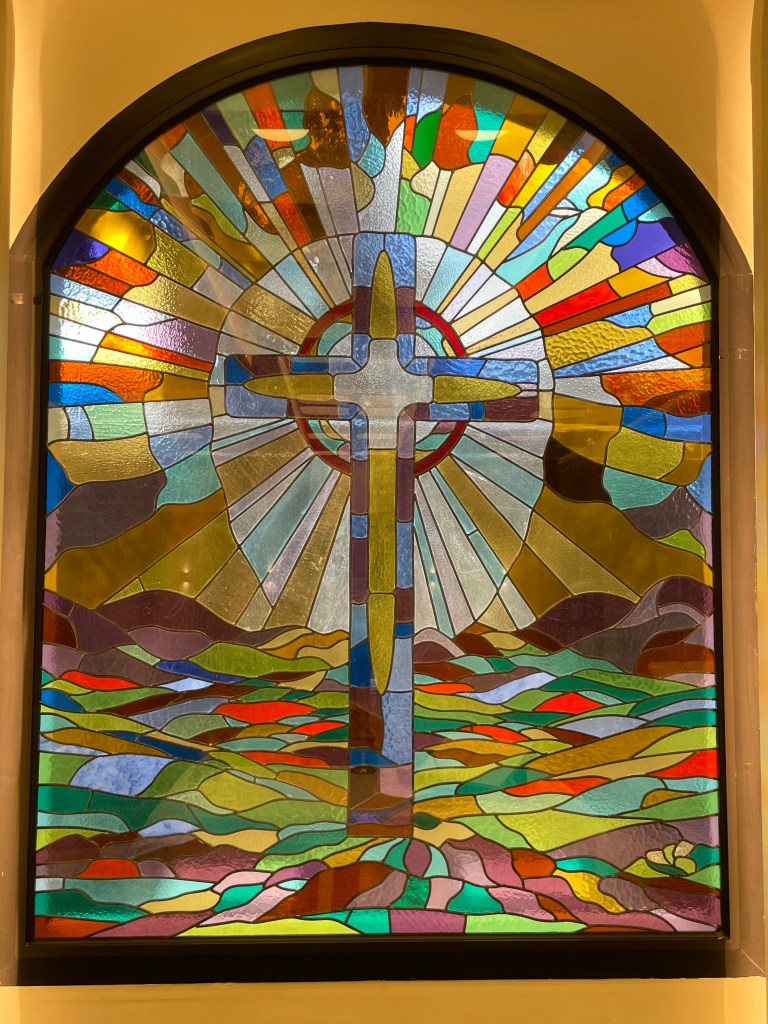
🇬🇧 The Exaltation of Christ on the Cross
One of the major theological features of the Gospel of John is the exaltation of Christ, reaching its climax in his elevation on the Cross. For John, this exaltation is not only glory but also a condition for salvation. He develops this theology in three steps.
1️⃣ The parallel with the bronze serpent
In his dialogue with Nicodemus, Jesus announces his death in these terms:
“And just as Moses lifted up the serpent in the wilderness, so must the Son of Man be lifted up, that whoever believes in him may have eternal life.” (John 3:14–15)
The reference is to Numbers 21:7–9, where Moses lifted up a bronze serpent so that those bitten by snakes could look at it and live.
2️⃣ The citation from Zechariah
When recounting Jesus’ death, John adds:
“And another passage of Scripture says, ‘They will look on the one whom they have pierced.’” (John 19:37)
This echoes Zechariah 12:10–13:1, where God pours out his spirit on those who pierced a mysterious figure, leading them to repentance. In John’s perspective, too, the vision of the exalted Christ is a source of salvation.
But this raises a question: how can one believe and have eternal life without having seen the exalted Christ?
3️⃣ The witness of the one who has seen
In John’s Gospel, faith is closely tied to seeing: Thomas believed only because he saw the risen Christ (John 20:29). But for those who have not seen, there is the testimony of the beloved disciple, the evangelist himself:
“He who saw this has testified so that you also may believe. His testimony is true… These things are written so that you may believe that Jesus is the Christ, the Son of God, and that by believing you may have life in his name.” (John 19:35; 20:31)
👉 For John, it is the vision of the glorified Christ—either directly or through the testimony of those who have seen—that gives birth to faith and, through faith, eternal life.
🇫🇷 L’exaltation du Christ sur la Croix
L’exaltation du Christ est une des caractéristiques majeures de l’évangile de Jean, le sommet étant l’élévation du Christ sur la Croix, au point que l’évangéliste en fait une condition du salut. Voici comment il développe cette théologie en trois étapes.
1️⃣ Le parallèle avec le serpent de bronze
Dans son échange avec Nicodème, Jésus annonce sa mort en ces termes :
« Et comme Moïse a élevé le serpent dans le désert, il faut que le Fils de l’homme soit élevé afin que quiconque croit ait, en lui, la vie éternelle. » (Jean 3,14-15)
Il établit un parallèle avec le serpent de bronze que Moïse éleva au désert pour que ceux qui étaient mordus puissent être sauvés en le regardant (Nombres 21,7-9).
2️⃣ La citation de Zacharie
Au récit de la mort de Jésus, Jean ajoute :
« Il y a aussi un autre passage de l’Écriture qui dit : Ils verront celui qu’ils ont transpercé. » (Jean 19,37)
Il cite ici Zacharie (12,10-13,1), où Yahvé répand son esprit sur ceux qui ont transpercé un personnage mystérieux, et ce don déclenche leur repentir. Pour Jean, de même, la vision du Christ exalté devient source de salut.
Mais une question se pose : comment croire et avoir la vie éternelle sans avoir vu le Christ exalté ?
3️⃣ Le témoignage de celui qui a vu
Chez Jean, la foi est intimement liée à la vue : Thomas n’a cru que parce qu’il a vu le Christ ressuscité (Jean 20,29). Mais pour ceux qui n’ont pas vu, il y a le témoignage de l’évangéliste, le disciple bien-aimé :
« Celui qui a vu a rendu témoignage, et son témoignage est conforme à la vérité, et d’ailleurs celui-là sait qu’il dit ce qui est vrai afin que vous aussi vous croyiez […] et qu’en croyant, vous ayez la vie en son nom. » (Jean 19,35 ; 20,31)
👉 Ainsi, pour Jean, c’est la vision du Christ glorifié — directement ou par le témoignage de ceux qui l’ont vu — qui engendre la foi et donne la vie éternelle.
 Biblical Readings